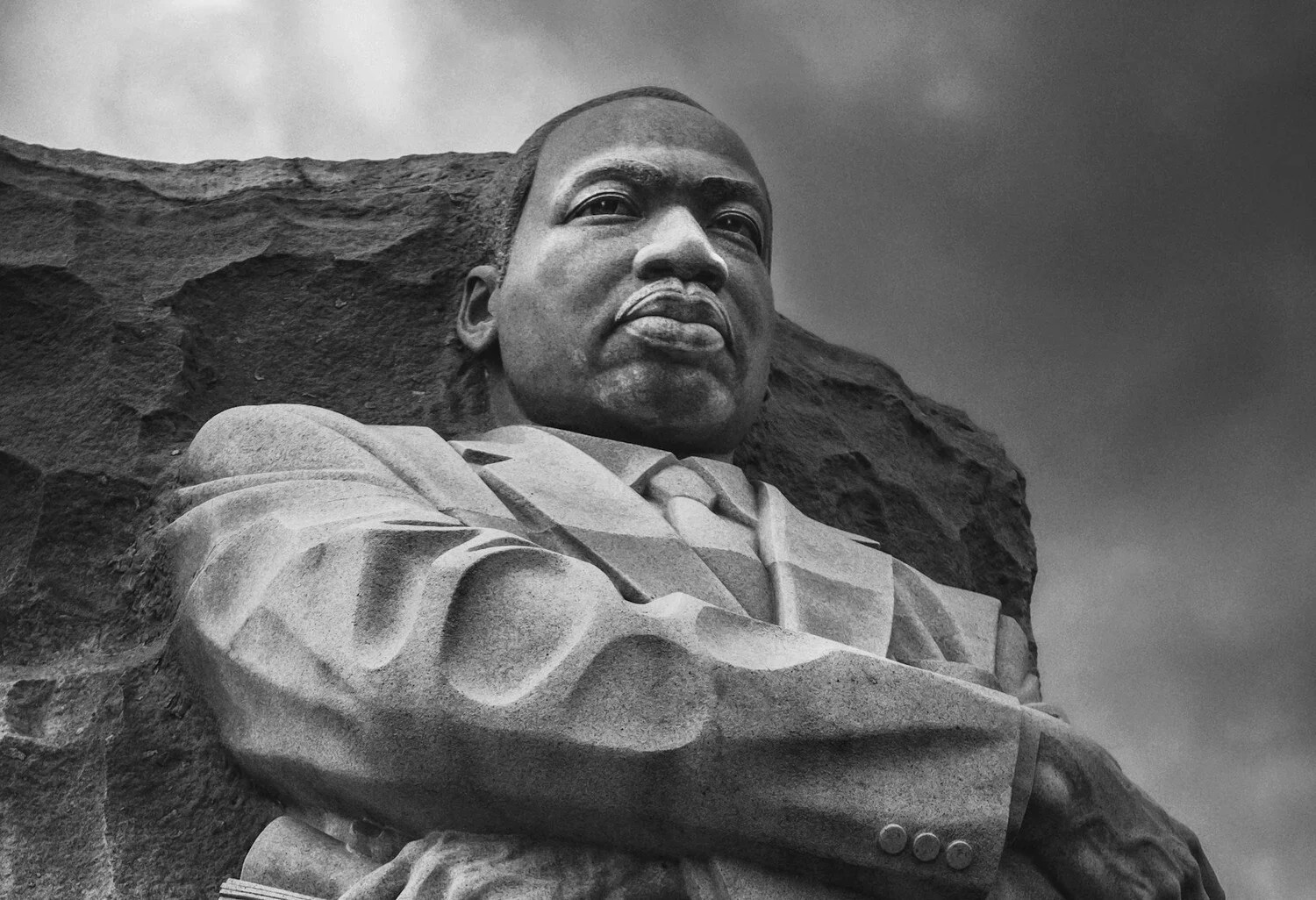
Did you know that since Dr. King’s death, wealth inequality has reached unprecedented levels, creating what I call a “wealth singularity”? This stark reality reminds us how far we are from realizing his vision of equity and justice.
One of the things I admire most about Dr. King was his ability to love all people, those who supported his ideals and even those who opposed him. He leaned on God’s strength to embody the transformative power of love. As he once said, “Love is the only force capable of transforming an enemy into a friend.” For Dr. King, love wasn’t just a lofty ideal; it was a practical strategy for healing divisions, overcoming hatred, and building bridges across racial, economic, and geographic lines.
But Dr. King didn’t stop at love; he demanded action. He called for justice to “roll on like a river, righteousness like a never-failing stream” (Amos 5:24). Justice, for him, wasn’t abstract, it was fairness and opportunity for all: rural whites, urban Blacks, and everyone in between. He understood that a nation cannot thrive when prosperity is hoarded by a few while the majority struggles.
Main Street and Wall Street: Economic Justice for All
Dr. King’s focus on economic justice feels especially relevant today when the divide between America’s Wall Street and Main Street continues to grow. Wall Street often feels like a world of limitless opportunity, while Main Street, where small businesses, workers, and communities strive to thrive, has to fight for every inch of progress.
Dr. King cared about everyone, from rural farming communities to urban centers, and his vision challenges us to ask tough questions:
- Are we addressing the barriers that keep wealth and opportunity concentrated at the tippy top?
- Are we calling out systems, like predatory lending or “ghetto loans”, that disproportionately harm marginalized communities?
Let me be clear: when I talk about the "tippy top," I’m referring to a tiny fraction of individuals whose wealth accumulation has reached unsustainable levels. If you’re reading this, chances are I’m not talking about you. Even those of us who feel accomplished, are not part of this stratosphere. But don’t lose sight of the fragility of success. It’s a reminder that no matter how secure we feel, we are not immune to the systems that perpetuate inequality. By focusing on others, we not only create a more just world, we also strengthen the foundations of our own success.
A Broader Vision of Justice
Dr. King’s Poor People’s Campaign wasn’t just about one race, region, or demographic. It highlighted systemic economic inequities that affected everyone, rural whites, urban Blacks, Latinos, Asians, and Indigenous communities. He understood that for justice to be sustainable, it must be universal.
Yet, today’s reality is sobering:
- Wealth inequality has grown into a "wealth singularity," where a small fraction of individuals control an outsized share of resources. This isn’t just inequality, it feels fundamentally different. The structure of the economy itself seems to amplify disparities, concentrating wealth in unprecedented ways that threaten not only economic fairness but also social cohesion.
- Policies that favor capital over labor have always existed, widening the gap between the wealthiest and the rest of society. But now, it feels different. What was once seen as the invisible hand of the market is now plainly visible, distracting ordinary people with the sleight of hand while deepening these divides. Slow up, make sure you digest what I just said.
- Predatory financial practices, like payday lending and subprime mortgages, continue to rob communities, extracting billions in wealth and snuffing out their chance to thrive.
As a banker, I see these inequities globally and up close. They show up in "who's getting paid on major projects," who's growing and who is not, and in lending practices, investment opportunities, and wealth creation. If you’ve never been on the inside, history and experience tell us it’s hard to navigate your way there. Did you catch that? These challenges demand bold and intentional focus, from all of us, no matter where we sit on the economic continuum.
That’s why, through Midwest BankCentre, I’ve committed to creating pathways for shared prosperity, offering non-predatory financial solutions, supporting small businesses, and investing in overlooked communities. For those who struggle the most, it’s critical to pay attention to the actions being taken to create alternative pathways, and to do your part by continuing to collectively show up. Don’t lie down. Do your part to see clearly. Do those things that are directly in your control to do. Believe, as Dr. King did, in the power of action.
Taking Bold Action to Build Bridges
Dr. King’s legacy reminds us that progress isn’t just about tearing down barriers; it’s about building bridges that connect people to equitable opportunities. His vision challenges us to recognize that awareness alone is not enough, true change requires action.
Here are a few ways I think we can get in where we fit in to be helpful:
- Mentor someone who feels stuck and needs guidance. Help them see alternative pathways to economic inclusion, whether through investing, pursuing careers that lead to financial stability, or seizing business opportunities. Equip them with the tools and knowledge to not just participate in the economy, but to own a stake in it.
- Support policies that level the economic playing field. Advocate for systems that serve people who play by the rules, not just those with the power to rewrite them. True fairness means creating systems that uplift those who are committed to contributing yet are often overlooked or excluded. Are you really listening?
- Invest in businesses and initiatives that lift entire communities, not just individuals. Don’t think of this as charity; think of it as a strategy to sustain a thriving economy and society. Supporting community-oriented businesses isn’t just altruistic, it’s essential for long-term economic health and shared prosperity.
If you’re in a position of influence, ask yourself:
- Are you actively creating opportunities for others to rise?
- Is your success leaving a legacy that benefits more than just yourself?
A Final Call to Reflection and Action
Dr. King taught us that love and justice are inseparable. Honoring his legacy means more than celebrating his words, it means continuing his work. Whether in your community, workplace, or home, you have the power to be a catalyst for equity and opportunity. No matter who you are, you also have personal agency. Do what is within your control: show up, pay attention, act.
So, here’s my challenge to you: What one system in your life, organization, or community will you confront to create lasting change? And who will you bring along to build something greater than yourself?
Justice demands bold action, but it also requires collective commitment. Together, we can build a world where justice flows abundantly and righteousness stands firm.
#MLKDay #EconomicJustice #SharedProsperity #LeadershipWithPurpose



 Thought-provoking reflections and leadership perspectives