
Yesterday is the last day of Black History Month. I’m grateful to have shared these reflections with the St. Louis Public Library.
This year, I’ve been mostly silent about Black History Month. But, I’ll admit, I’ve been sitting with something… Not just the celebration. Not just the posts. Not just the quotes. But the question.
What happens when history doesn’t just inform you, but transforms you?
Earlier today, I stood inside the St. Louis Public Library and delivered a message titled Seeing Ourselves Clearly: A Century of Black History Commemorations.
I began with a poem I wrote years ago called Distance.
I wrote it before I understood policy. Before I understood systems. Before I understood economics.
I just understood distance.
Emotional distance.
Psychological distance.
The distance between who I was told I would be… and who I imagined I could become.
That distance is not accidental.
One hundred years ago, Dr. Carter G. Woodson recognized a similar kind of distance. Not geographic. Not political. Psychological.
He understood that if you distort how a people see themselves, you distort what they believe is possible.
Identity precedes action. Self-perception precedes contribution.
If you teach a people that their story begins in bondage, they may unconsciously build lives that feel bounded.
Woodson launched Negro History Week in 1925 because he believed miseducation was dangerous. Not just intellectually dangerous, psychologically dangerous.
And here we are, a century later.
The question is not whether we’ve had a month of celebration.
The question is whether we see ourselves clearly.
Because I know what it feels like not to.
I grew up carrying my belongings in a trash bag. I experienced abuse before I had language for it. I lived in systems that stabilized children but did not always protect them. I watched addiction hollow out my family. I buried my mother at eight years old.
Those scars are not just personal.
They are historical.
They are structural.
They are American.
And yet.
Here I stand, a former foster youth, statistically unlikely to graduate college, now leading a multibillion-dollar financial institution.
People often ask, “How did you make it?”
But that question is incomplete.
A better question is: What systems shaped the odds in the first place?
More than 400,000 children are in foster care on any given day. About 20,000 age out each year without permanent family support. Fewer than 3% graduate from college.
Black children are overrepresented in that system.
That is not coincidence. That is policy. That is power. That is place.
From redlining to disinvestment. From the crack epidemic to mass incarceration. From factory flight to fractured family policies.
We cannot talk about Black history without talking about capital.
We cannot talk about civil rights without talking about ownership.
And we cannot talk about progress without asking who is sitting at the tables where decisions are made.
Black history is protest, and protest is sacred.
But Black history is also institution-building. It is entrepreneurship. It is governance. It is land ownership. It is banking. It is capital allocation.
Did you catch that?
Representation is visibility. Ownership is power.
Resilience kept us alive. But resilience alone keeps us in recovery mode.
The next century must be about redesign.
Redesigning access to capital. Redesigning narratives. Redesigning opportunity.
And that redesign begins with clarity.
There have been moments I’ve walked into boardrooms and felt the weight of history on my shoulders. In those moments, my prayer has not been about competence.
It has been about clarity.
“God, remind me who I am.”
Because trauma is real. But trauma does not get the final word.
History includes scars. But scars are evidence of healing.
So as Black History Month closes, here are five reflections I carry forward:
.jpg?width=1280&height=720&name=BLOG%20VISUALS%20(39).jpg)
The true measure of Black History Month is not how many quotes we share.
It is whether our children see themselves clearly.
As leaders.
As owners.
As innovators.
As visionaries.
I stand as someone who statistically should not be here.
But statistics are not destiny.
History is not a cage.
It is a compass.
When we see ourselves clearly, we move differently. When we move differently, institutions change. And when institutions change, communities rise.
A century ago, Woodson began a week that became a month.
Now it is our turn to shape what the next century becomes.
Not just survival.
But stewardship. Ownership. Clarity. Vision.
The transformation continues.
And it is now our move.
PS: Earlier today, I announced 360 Black, One Message. Twelve Churches.
Because seeing ourselves clearly must move beyond a month, and into our institutions.
Learn more or connect here: https://www.linkedin.com/pulse/360-black-one-message-twelve-churches-orvin-kimbrough-6fspc
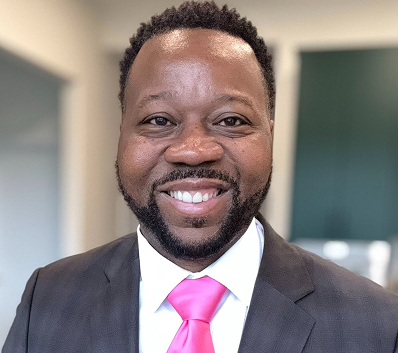
Hi, I’m Orvin Kimbrough—volunteer, board director, chairman, and CEO. I help professionals move from feeling stuck to being strengthened by reshaping how they think, lead, and live. My work focuses on confidence, leadership, and influence through mindset shifts, expanded networks, and bold, values-aligned action. My perspective is rooted in lived experience—from growing up in foster care to leading complex institutions as a CEO—and shaped by faith, resilience, and a deep belief in human potential.
Enjoyed this post?
For deeper reflections like this one, including leadership frameworks and behind-the-scenes insights, subscribe to Premium Leadership Email and never miss a dose of inspiration.

Premium Content
Free
Go beyond the basics. Access exclusive blogs like The Accidental Banker and the Gratitude Series—a members-only library to help you think differently, lead courageously, and live intentionally inside The Thrivers Path™.
-
 All my publicly available content
 - Premium articles and content available only to subscribers
- My monthly insights newsletter
- Early announcements