“Everything is permissible for me, but not everything is beneficial.” —1 Corinthians 6:12 (NIV)
There are habits we inherit and choices we normalize, not because they’re best for us, but because they’re familiar… accessible… even rewarded.
Sometimes, the toll isn’t obvious. Sometimes, it’s quiet.
That’s what today’s reflection is about.
You’ve probably heard me say before:
My mother died when I was five years old because of alcohol and drug abuse.
I’ve carried that loss with me my whole life, quietly, sometimes unconsciously, but always there.
Growing up in the ’70s, I lived in a community gutted by the rise of crack cocaine, heroin, and alcohol. The generation I belonged to, and the one right behind mine, watched the crack epidemic unfold in real time. These weren’t just substances on our streets. They were in our homes. In our relationships. In our routines.
But it wasn’t just drugs that were spreading, it was something deeper. Something harder to name.
Because around the same time, work was disappearing.
When industries moved out of the cities in the ’60s and ’70s, they didn’t just take jobs.
They took hope.
They took structure.
They took identity.
And when that kind of scaffolding collapses, people find ways to cope. Often with what’s easiest to grab, alcohol, drugs, gangs.
That was the world I came up in. My mother was a chronic user. So were most people in my immediate circle. When I moved in with my guardian, I found a more stable home, only from the standpoint that she didn’t drink. But the neighborhood still carried the residue of addiction, poverty, and disconnection.
My younger brother wasn’t as lucky. He fell in with the wrong crowd. Gangs, drugs, alcohol. At 17, he was shot and paralyzed. That moment changed our family in ways we’re still trying to understand.
My Own Brush With It
I had my first joint in high school. Just once. Following the crowd.
My oldest brother checked me hard for it, and I left it alone.
I had my first beer at 19, half a beer, actually, and didn’t like it. But by the time I turned 21, I had my first real drink.
It started off social. I didn’t keep alcohol at home. I drank at parties, with friends, in what felt like “safe” spaces. No big deal, or so I told myself.
But when I stepped into my professional career, the context changed.
By 31, working at United Way, I was going to receptions, galas, networking events. There was always an open bar. I started to notice: if I wanted to, I could drink nearly every night. And for a while… I did.
It didn’t derail my work. I didn’t lose control.
But looking back, it became a pattern.
A habit I didn’t question, because it was normal.
Because this is what professionals do, right?
And between an aggressive schedule before and after work, I’m certain I missed out on being fully present for my children during those early years. I was up early, out late, and then the cycle repeated itself. So I was functioning, but not fully awake.
Are you showing up with your whole self, or just the version that’s been numbed enough to get through the day?
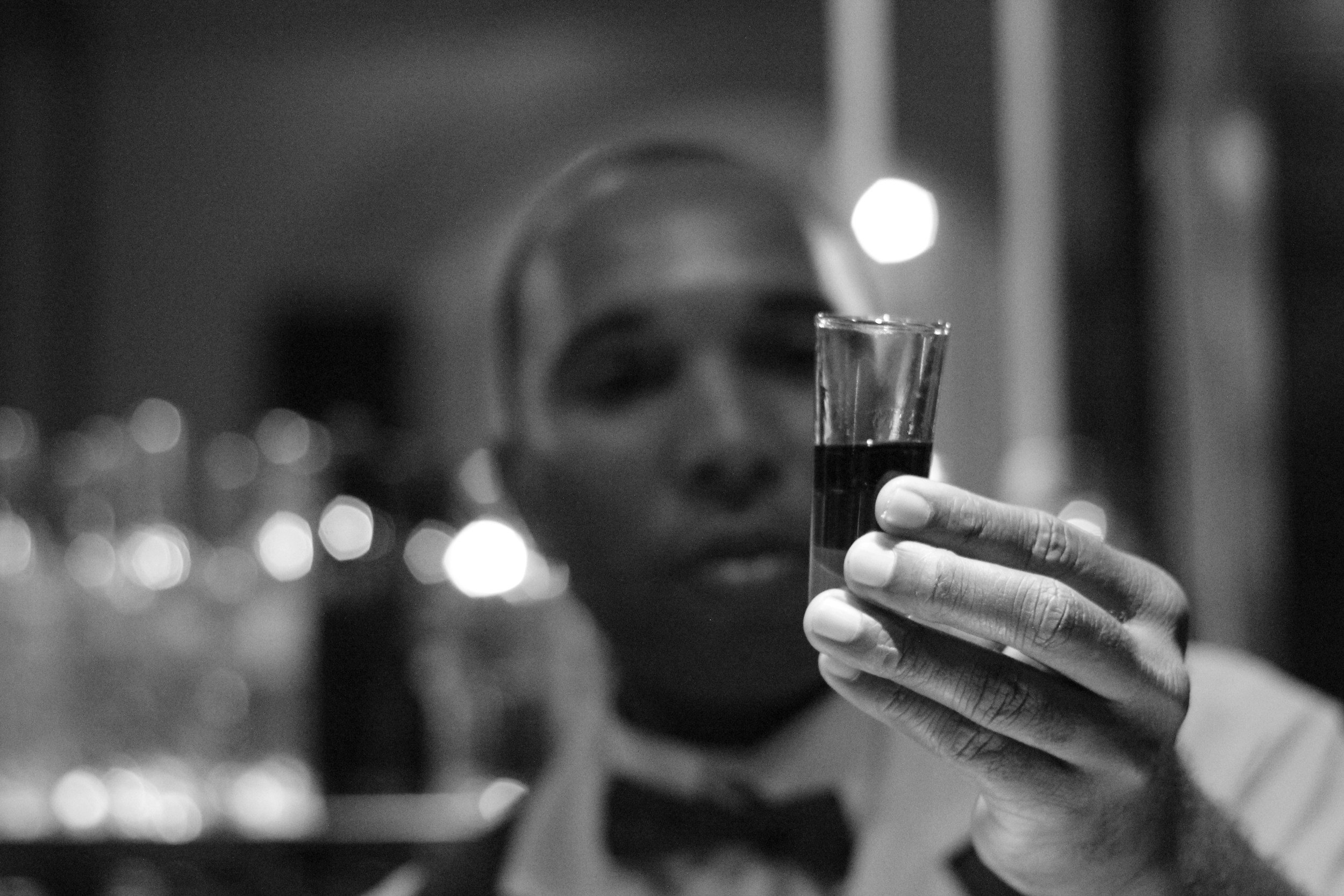
The professional drinking culture can be loud and normalized. I remember once someone asked me if I had a drinking problem. I said no, and then found myself wondering if he had a drinking problem.
When you're going through growth and transformation, and there’s struggle in it, and you don’t feel like you can truly engage with anyone about it, that leaves room for creative ways to release stress.
I’m more aware now than I was then, aware of why I sometimes chose to go to the bar solo to have a drink. I’m more mindful now when I hold a glass, scanning the room, wondering why I’m really there, and wondering about the other stories too.
Sometimes I’m just passing through to pick up food.
Sometimes I’m seeking relief.
Sometimes I’m processing life.
But at least now, I’m paying attention.
DNA and Discipline
Here’s the thing I didn’t fully consider back then:
My mother’s DNA is my DNA.
Her story isn’t mine. But it could’ve been.
And in some ways, it still whispers to me.
I’ve learned that even when alcohol doesn’t wreck your life, it can still shape it.
It can dull your edge.
It can disguise itself as relief.
It can creep into your routine without you even noticing.
And the truth is, not all shaping is dramatic.
Sometimes it’s just enough to knock your dreams a little off center.
Just enough to keep you settling instead of soaring.
Just enough to keep you present, but not fully alive.
I’m not here to judge. I’m not here to preach.
I’m not saying don’t drink.
I’m just saying…pay attention.
Ask yourself why.
Is it celebration?
Is it connection?
Or is it escape?
Because the toll doesn’t always show up in obvious ways.
Sometimes the toll is quiet.
Emotional.
Spiritual.
Sometimes it shows up as the thing that’s missing, the clarity, the creativity, the calling that used to live in that space.
What I’ve Learned
As leaders, professionals, parents, and people, we carry more than resumes and titles.
We carry stories. Some we inherited. Some we survived.
But all of them shape how we show up in the world.
Alcohol can be fun. Social. Casual.
But for some of us, especially those who come from histories like mine, it can also be a slow drift.
A slide away from wholeness.
Away from presence.
Away from the sharpness we were gifted to lead with.
The world will tell you what’s cool.
What’s grown.
What’s sophisticated.
But the world won’t be there when you’re sitting in the dark, wondering when your edge disappeared.
So I’m just saying this, gently and honestly:
Pause. Pay attention. Play your game, not the one the world normalizes.
Ask yourself: What’s the toll?
Because being “fine” might be enough for some.
But I love my people too much to pretend fine is the goal.
I don’t want us to be fine.
I want us to be free.
I want us to be whole.
This isn’t about alcohol. It’s about what we’re trading for it, and whether it’s worth it.
It’s your move.
I share this not to point fingers, but to open my hands. To remind us that our wholeness matters. That being “fine” isn’t the finish line. That we have the power, through awareness and grace, to choose differently, even when our DNA, our stress, or our culture says otherwise.
Let’s pray or reflect together:


 Thought-provoking reflections and leadership perspectives