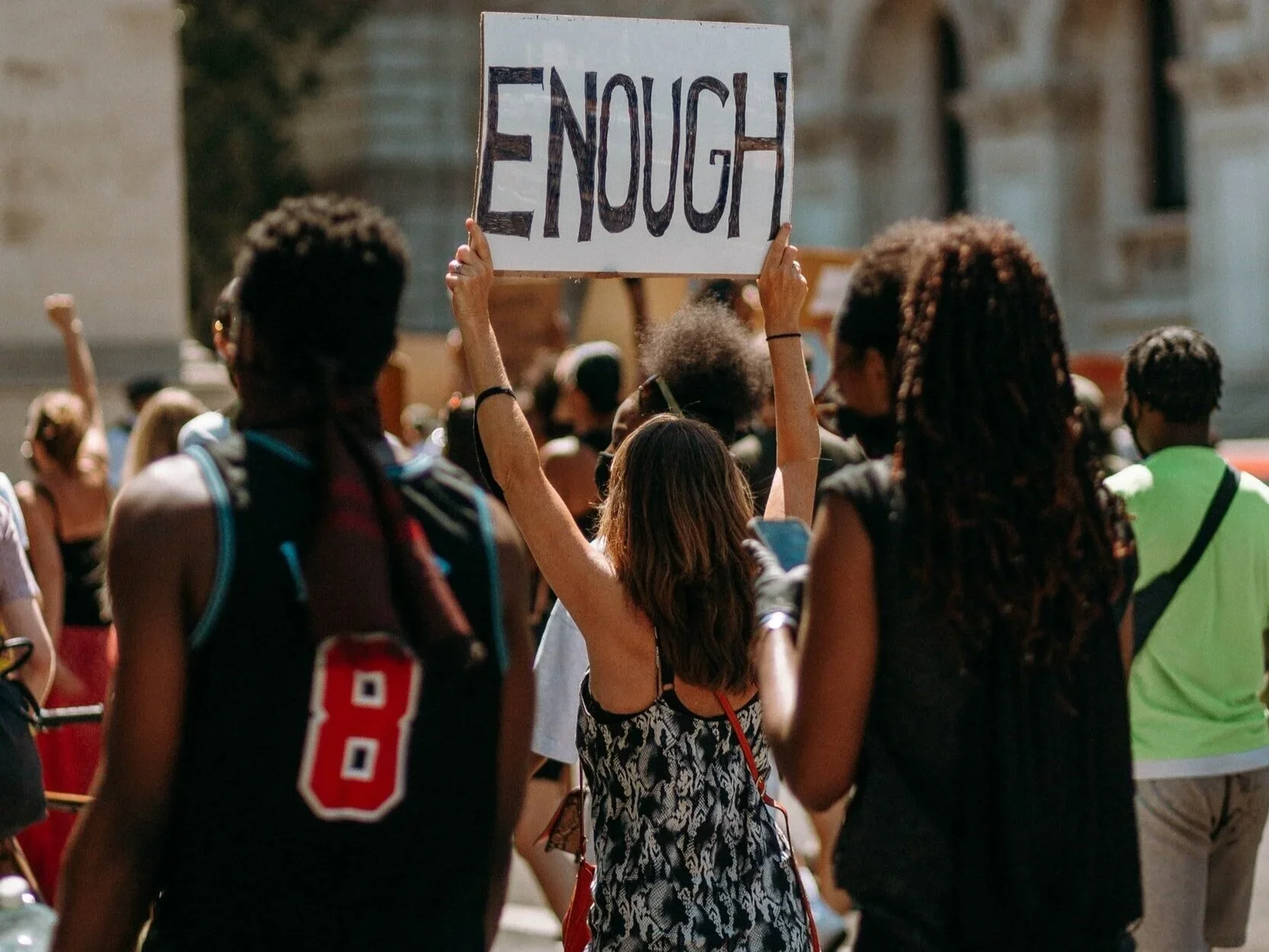
The dual crises of the pandemic and peoples’ protests have opened many eyes to the systemic issues that disproportionately affect Black and Hispanic people. I grew up poor in underserved Black neighborhoods, so I know what the rage is about in our communities. I know hopelessness fills the void created by few jobs and few opportunities. I know there are ways to inject hope into our communities. I also know people are resilient.
We stand at what is clearly a watershed moment. I am concerned that we in the St. Louis region, and in other similar regions, will pigeonhole the current pattern of protests as nothing more than an indictment reflecting how Black Americans feel they are treated by law enforcement. The truth is that the way Black and Hispanic people are treated by some in law enforcement is only one miscarriage of justice. There’s also the lack of power over one’s opportunities and its symbiotic relationship with economic equity through business ownership.
Many local small businesses, the mom-and-pop grocers, clothing stores, dry cleaners, barber shops and beauty salons, have struggled or gone under, leaving gaping holes in the fabric of our local communities. When these businesses close, it hurts more than the owners. It leads to a loss of jobs, fuels hopelessness and increases crime as bona fide opportunities disappear. It also weakens the foundations on which schools, churches and other businesses can function and grow, threatening the social networks that keep communities strong.
Most people are unaware of how diverse and important this foundational group of businesses is to our local communities and total economy. Did you know that the small businesses on each community’s “Main Street” represent 99.9% of all businesses, and employ 47% of all American workers? More than half of these businesses are tiny, with four or fewer employees. Of the nation’s 30 million businesses, roughly 8 million are minority-owned small businesses that collectively employ nearly 8.7 million workers and generate more than $1 trillion in economic output annually. Yet Black-owned businesses still are less likely to be approved for bank loans, with an approval rate of 46.5% compared to 75.3% for white-owned businesses, according to the Federal Reserve. In addition, Black entrepreneurs receive only 1% of venture capital.
Black-owned businesses are second only to home ownership as the key to building wealth and its positive byproducts: better education, stable housing, improved health and lower crime.
Our region, like so many, needs a tremendous shot in the arm to change the thinking that shapes our trajectory. Seriously investing in Black and Hispanic small businesses is key to giving a significant lift to entire local economies. Past attempts to promote Black-owned business ventures have had marginal success. Now is the time to revisit an intentional strategy to grow more Black-owned businesses that expand to $1 million, $10 million, $100 million and more in annual revenues.
I urge those with power to use their influence to build diverse and inclusive leadership teams and boards, deliberately become allies to Black and Hispanic associates who are working their way up the corporate ladder, and take a fresh look at supplier diversity programs that do more than just check a box but instead scale up the success of Black- and Hispanic-owned businesses. I urge everyone to vote, to be counted in the census, and to support minority-owned businesses, personally and through corporate practices.
These actions are not just nice to do. They are what we must do. We can gain $8 trillion in our gross domestic product by 2050 by closing the U.S. racial equity gap. Closing the gap means reducing and ultimately eliminating the disparities and opportunity differentials for human potential and economic contributions by people of color.
This is the time to call each other in. This is about sharing power, practicing justice, and creating the conditions for generating wealth to own a home, to start and scale a business, to educate our children and to live healthy self-determined lives. Let one’s agency, not the color of one’s skin, decide how fast and far each person goes. Shared power is our only sustainable path to regional prosperity.



 Thought-provoking reflections and leadership perspectives