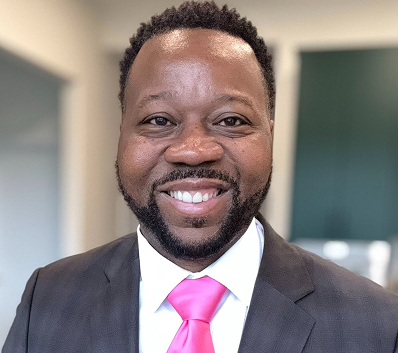
I am a Black man raised in foster care in the proverbial economic gutters of North St. Louis. I am a product of the St. Louis City public school system and a beneficiary of affirmative action. I am also the Chairman and CEO of St. Louis’ second largest privately held bank. I am the former CEO of United Way of Greater St. Louis, the largest United Way affiliate in the country. I move between circles that don’t generally intersect and have lived a life that I was told was impossible. To be at this point in life, never forgetting the past, the journey and those who are still struggling to breakthrough offers a unique vantage point and perspective, and mine is that much of what ails us can be solved via a democratized approach to access to opportunity and capital.
Well-intentioned politicians, business leaders and academic types have long spoken of social mobility and equitable access to opportunity in America. But that remains an empty promise for too many Americans, the majority of whom stay in the economic quartile into which they’re born. Today, we see the rage and despair of that lack of participation and true engagement playing out in streets across America.
Systems are designed to help, hurt or maintain the status quo. In the world of banking, there is a long history of systems that keep people with the greatest need from accessing capital to pursue dreams and achieve upward mobility. Those on the losing end are more likely to stay put unless we all change our behavior and expect more from each other and from our financial institutions.
For any race to the top, some will run faster than others, train harder, have better running shoes, or possess more raw talent. That is OK. What’s not OK is our collective failure to give everyone access to the starting line. In the financial world, the starting line is access to capital, whether it’s to buy a home or car, start or scale a business or pay for an education.
It’s not too much to ask our financial institutions to do more. It’s not too much to expect every financial institution to ensure that all citizens and all neighborhoods have access to capital. It’s not too much to revisit our own decisions by doing business with banks that open the starting line to all.
It’s about starting where people are and building bridges, not erecting gates. At our Bank, we profitably extend credit to people who had been shut off from the starting line. Those who live paycheck-to-paycheck, which is almost 80% of US workers, often turn to the predatory lending establishments because there haven’t been enough alternatives. Paying almost 400% in interest is the equivalent of financial quicksand.
Yet as a local bank invested locally, we offer loan alternatives at attractive rates for those whose credit is less than creditworthy but whose work ethic inspires us to build credit models in new ways.
There is proof that the barriers to mainstream financial services can be removed. Our community has much to gain by all financial institutions joining together in adopting greater flexibility with credit and lending policies and more creativity in product offerings. Community banks know how to save customers money, broaden access to capital and negate the need for payday loan services.
I believe that economic mobility impacts everything, from ideas to business ownership, from justice to education, and from health access to propensity for disease. Each one of us can drive the change and the more who do, the bigger the ripple effect. If we the people truly want to see systems change, then we must bank our values. If we believe everyone deserves a place on the starting line, everybody deserves a chance to build financial security and every neighborhood deserves to thrive, then we should put our money where our heart is. We shouldn’t just think about it. Let’s put our capital to work with banks that work in the communities that need it most.



 Thought-provoking reflections and leadership perspectives