Julius Caesar claimed, “It is easier to find men who will volunteer to die than to find those who are willing to endure pain with patience.” Patience is not a dominant tool in my toolbox.
As you might guess, I learned this lesson after some trial and error. As a younger leader, if I felt it, I said it. And because of this, I died a thousand deaths, some meaningful and others meaningless. One time, I remember asking a foundation leader if the initiative that we were working on was set up to succeed or fail. At the time I was a lowly staffer with a newly minted degree, a desire to change the world, and a chip on my shoulder. Though there was nothing to gain by the statement, I said it anyway because I was frustrated with the pace of change. Another time, I recall asking a former boss, “Did you hire me to only work with diverse populations?” I felt that I had gifts beyond what I perceived as a “token” role. (He said no. After getting to know him and understanding his heart, I couldn’t blame him if he was offended by my question.) Since then, I’ve learned to put in appropriate safeguards to prevent me from accelerating into a proverbial ditch or off of a cliff. I am astounded at the grace that I’ve encountered, when despite my safeguards, I moved forward to speak or act too quickly.
History tells us that we need both types of leaders, the patient and the impatient, at different points to achieve meaningful progress towards a goal. I’ve learned that patience, if well-channeled, can be a powerful strategy to drive change. I have learned from mentors that to be patient is not to suggest that you stop pressing or lose the fight deep within you. It’s quite the opposite. You simply moderate your approach, lying dormant until it’s the appropriate time to act. In the waiting, you sharpen your thinking, sparring intellectually with leaders in books and real-life. You obsess over the strategy, and when the opportunity arises, you execute your case, position or cause with excellence. This is true in business, community and everyday life.
Now, in my more mature state, if I feel it, I censor it. I then determine when and where it’s best to plant my ideas, and if necessary, vent my frustrations. Being emotional about the things we care most about will not advance our case. Being passionate, carefully projecting our thinking, creating awareness and helping light the fire of others, can accelerate the change we seek. With patience, I have gained an understanding of the purpose of my position in life and work , and it has nothing to do with me, and everything to do with us. My purpose is to work and encourage others to project a different vision for our region. This means committing to every child succeeding, every adult being self-sufficient, every family being strong, every older adult being independent, every individual being healthy, and every neighborhood being safe.
I know that change will take time. In the interim we must be willing to stand up and at times speak out persistently and purposefully on issues so that we can achieve our end game.



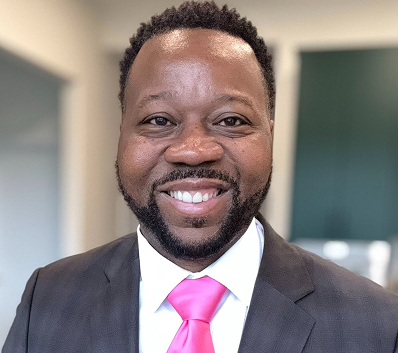

 Thought-provoking reflections and leadership perspectives