

Why high-performing leaders resist, even when we want to grow.
Why was I, deep in my spirit, a little resistant to the 360?
That’s the question I kept turning over.
And the answer surprised me.
From the outside looking in, it probably didn’t make sense. We’ve had a strong five- or six-year run. No major gaps. No glaring issues. We’ve stretched. We’ve grown. So when the idea of a 360-degree feedback evaluation came up, part of me felt like… why?
I remember the moment it was mentioned.
We were wrapping up a board meeting. The tone was light, casual even.
“Let’s start thinking about a 360,” someone said.
But my spirit tightened.
It felt like the board was searching for something to say to me.
Not out of malice, but in that vague, corporate way where feedback starts to feel less like development and more like quiet control.
I didn’t trust it.
Not the way it was introduced.
Not the way it landed in my body.
Context Changes Everything
You see, for someone like me, Black, first-generation, and leading in rooms not built with me in mind—there’s always another layer.
An undercurrent.
The one shaped by years of invisible tax.
Of code-switching and micro-corrections.
Of being the only one to name the thing everyone else pretends not to see.
So no, my resistance wasn’t fear of feedback.
I get evaluated annually. I welcome insight. I invite challenge.
But this?
This felt different.
It felt like something was being done to me, not with me.
And when you’ve had to fight for your credibility in spaces that weigh you differently… that matters.
A lot.
Not Every Tool Feels Neutral
We like to say that tools like 360s are neutral instruments for growth.
And maybe they are, for some.
But when you’ve always had to scan the room before you speak,
or adjust your voice to sound “credible,”
or wonder if your confidence is being recast as arrogance…
Neutral feels like a luxury.
For leaders like me, even well-intentioned tools can start to feel like surveillance instead of support.
That’s why context matters more than content.
When the 360 was first introduced, it didn’t come with trust.
It came with compliance language.
“Not tied to compensation,” they said.
But the environment already felt evaluative.
And when trust is thin, even the right tool feels like the wrong move.
The Five-Year Shift in My Spirit
What changed for me was simple, but significant:
I stopped seeing the 360 as a one-time inspection…
and started seeing it as a five-year mirror.
A long-term leadership map, not just a snapshot.
A tool to help me grow into the next version of myself, not just defend the current one.
That changed the energy.
Because I’m not interested in being evaluated to death.
I’m interested in becoming.
And the real question I had to wrestle with wasn’t whether I was ready for feedback…
It was: Do I trust the system offering it?
The honest answer?
Both things were true.
Suspicion Is a Survival Skill
.jpg?width=830&height=830&name=Blue+and+Black+Visual+Charts+Presentation+(8).jpg)
When you’ve lived your life in constant vigilance, watching body language, reading subtext, measuring safety, suspicion becomes instinct.
It’s a form of intelligence. A necessary one.
Especially when you’ve seen what happens to leaders who speak too soon, or stand too tall, or say too much.
But here’s the twist:
That same suspicion, once useful, can start to resist the very growth that would liberate you.
So I had to ask myself again:
Was I resisting the tool?
Or was I resisting the system behind it?
And if it’s the system, do I throw out the tool?
Or do I use it to reshape the system?
That’s when I realized:
The 360 wasn’t the enemy. My fatigue was.
And the deeper work wasn’t avoiding evaluation…
It was learning how to rebuild trust without surrendering self.
What This Taught Me About Leadership
What this experience taught me is simple but important:
As leaders, we all carry context into the room, and context shapes how we receive even the best-intended tools. Growth isn’t just about being open to feedback. It’s about creating the trust required for it to land. Tools are only as effective as the relationships that deliver them.
If you're introducing a tool like this to someone else, especially to someone not historically centered in the room, bring trust first. Because how you offer growth matters just as much as the tool itself.
A Final Word for Leaders Like Me
If you’re like me, Black, first-gen, high-performing, and always measuring the room before you enter it, you might find yourself turning down things not because they’re wrong… but because you’re tired.
Tired of being misread.
Tired of defending what others are allowed to simply express.
Tired of being strong in silence.
I see you.
But I want to offer you this:
- Don’t let past harm rob you of future growth.
- Say yes to the right tools, but demand better context.
- Say yes to deep feedback, but only if it’s grounded in relationship, not suspicion.
Because one day, we’ll be the ones designing the tools.
But until then, let’s be brave enough to use them, on our terms.
Let’s keep growing.
With clear eyes, full hearts, and the courage to trust again.
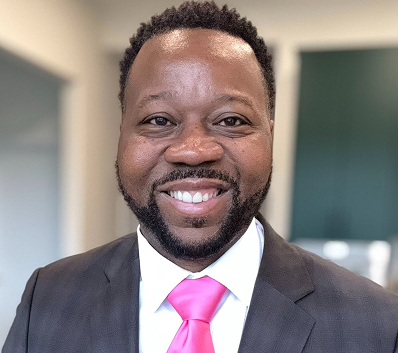
Hi, I’m Orvin Kimbrough, volunteer, board director, chairman, and CEO. I help professionals move from feeling stuck to being strengthened by reshaping how they think, lead, and live. My work focuses on confidence, leadership, and influence through mindset shifts, expanded networks, and bold, values-aligned action. My perspective is rooted in lived experience, from growing up in foster care to leading complex institutions as a CEO and shaped by faith, resilience, and a deep belief in human potential.
Enjoyed this post?
Stay connected and continue the journey with insights on leadership, growth, resilience, and intentional living delivered straight to your inbox.

Subscribe to the Leadership Insights Newsletter and receive:
-
 Thought-provoking reflections and leadership perspectives
 - Practical strategies for personal and professional growth
- Monthly insights and inspiration
- Early announcements and updates from The Thrivers Path™